
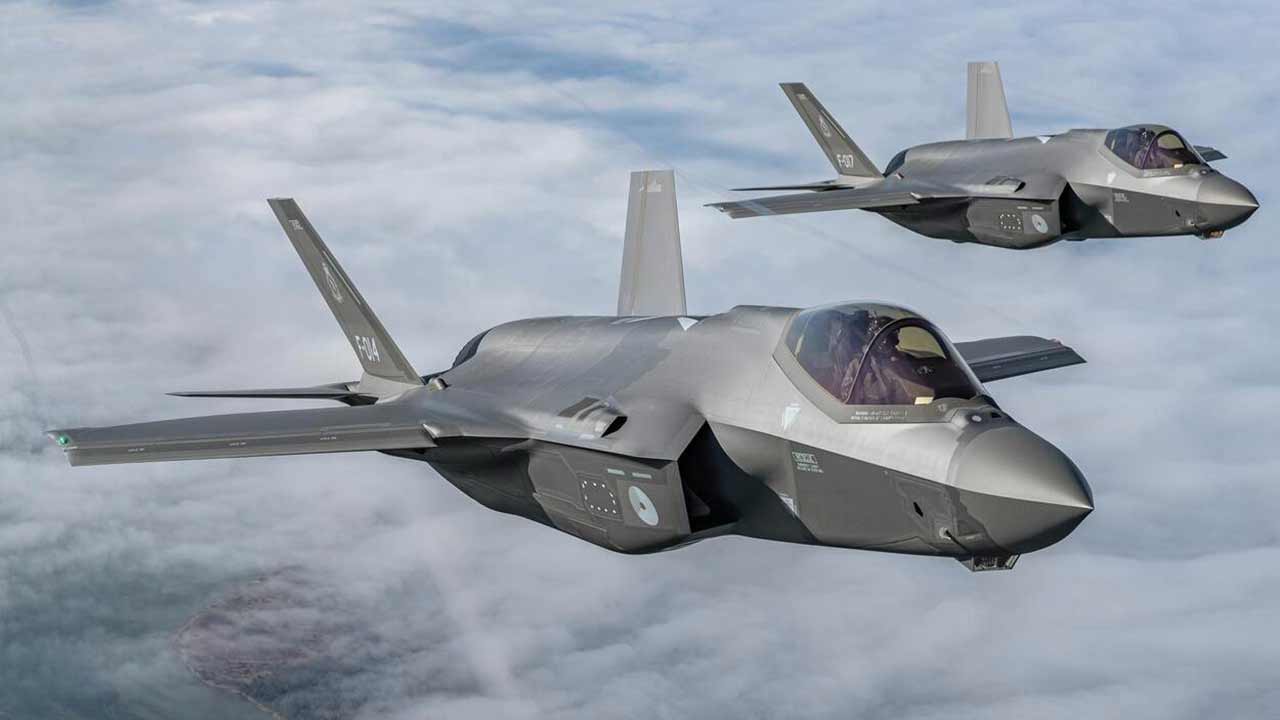
A dozen F-35 fighter jets from the Royal Netherlands Air Force are on their way to the United States to take part in an intensive three-week training program.
The aircraft, which took off for Mountain Home Air Force Base in the state of Idaho, will participate in an annual exercise focused on preparing the forces for the defense of the area covered by the NATO treaty.
During the training, pilots and support crews will enhance their skills in the advanced use of the F-35’s weapons, including precision strike operations — such as controlled bombings — and missions in simulated combat environments.
In these scenarios, crews will face realistic challenges such as simulated attacks, electronic interference, and low-altitude flights to evade enemy radar.
Logistical support and aerial refueling
The mission is also supported by four Airbus A330 MRTT tanker aircraft, responsible for refueling the F-35s in midair during their transatlantic crossing.
The aircraft belong to the Multinational Multirole Tanker Transport Unit (MMU), a joint NATO unit dedicated to air transport and support. All aircraft made a stopover in the Azores before continuing to the United States.
Training on American soil
The exercises are conducted in the U.S. because Dutch airspace offers few suitable areas for the use of live weaponry. At Mountain Home, crews have access to more comprehensive infrastructure and vast training zones, allowing them to simulate more complex and realistic combat scenarios.
According to the Dutch Ministry of Defense, this type of training is essential to ensure that pilots and crews maintain the highest level of readiness, directly contributing to the collective security of the Atlantic Alliance.
Source and images: Ministry of Defense of the Netherlands. This content was created with the help of AI and reviewed by the editorial team.
